

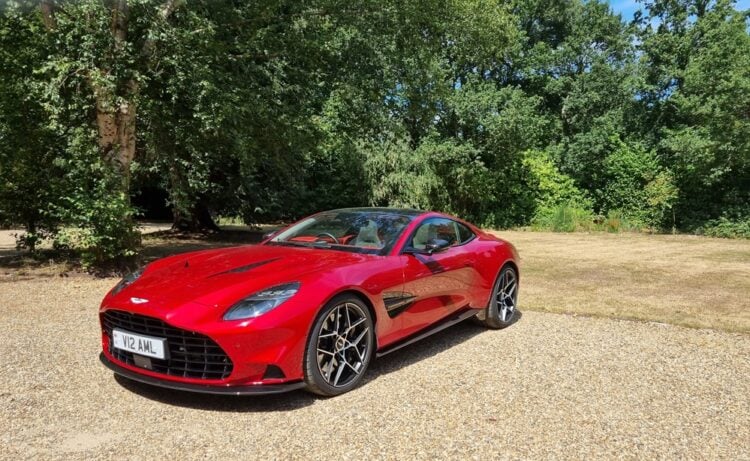
You feel good about the Aston Martin Vanquish just walking up to it. There it sits, resplendent in supernova red, the sunlight dancing off its curves and edges in the midst of a summer-long heatwave in August 2026. You could just stand there and look at it; it’s an achingly gorgeous thing. Open the upwards-protruding doors and you’re met with an ocean of leather and opulence. It’s here that Aston Martin has noticeably raised its game in recent times. The Aston Martin Vanquish’s predecessor, the Aston Martin DBS, had looks to die for but a questionable interior. No more parts from the AMG parts bin, this unquestionably is the very best of British.
You could write the same opening about the Aston Martin Vantage and DB12, too. So, what sets the Vanquish apart? A twin-turbo charged 5.2-litre V12, that’s what. We were told these engines were on their way out, asphyxiated by tightening regulations. Here we are in 2026, however, with a mighty triumvirate of V12s to choose from in the form of the Lamborghini Revuelto, Ferrari 12Cilindri and this, the Aston Martin Vanquish. Looking slightly further afield, you can also have a Ferrari Purosangue or Rolls-Royce Cullinan, should you need an SUV with a V12. It’s the V10 that’s vanishing from view.
Aston Martin Vanquish key facts and figures
| Engine | 5.2-litre twin-turbo V12 |
| Power | 824bhp |
| Torque | 1,000Nm |
| Transmission | 8-speed automatic |
| Drivetrain | Rear-wheel drive |
| 0-62 mph | 3.3 seconds |
| 0-100 mph | 6.4 seconds |
| Top speed | 211 mph |
| Length | 4.85 m |
| Width | 2.12 m |
| Seats | 4 (2+2 arrangement in latest model) |
| Price | from c.£335,000; as tested c.£400,000 |
| Test economy | 15.7 mpg over 235 miles |
What’s the Aston Martin Vanquish like to live with?
It’s hard to overstate the importance of the aesthetics, because the Aston Martin Vanquish makes you feel good on approach, then again when you’re walking away. It’s hard to argue that Aston Martin is on anything but the top of its game when it comes to design of its products.
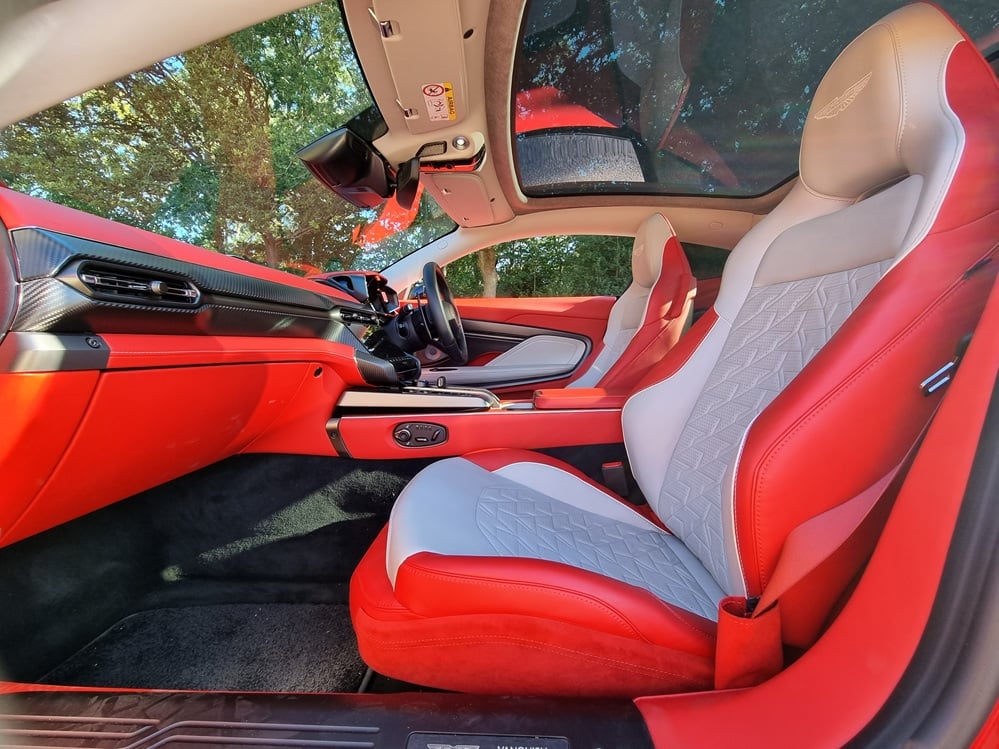
From start up, the V12 whoomphs into life, leaving no room for misinterpretation as to its intent. The hooliganism is tempered by a wonderful cabin. Aston has given this third generation Vanquish a slight overhaul from its inception with the introduction of rear seats. Upon arrival, it was only a two-seater, which seemed a shame. It’s long enough at 4.85m to accommodate four people, which it now does well. I got two kids in easily enough and even three adults for one 45-minute jaunt. Murmurs of discontent emanated from the rear only towards the end.
At 2.12m wide with the mirrors out, you’d be brave to tackle multi-storeys, especially with the lower body pack carbon fibre fitted here. I didn’t dare risk it, but the 360-degree camera certainly helps if you’re brave enough.
The Bowers & Wilkins stereo is an excellent accompaniment for longer journeys, although it has its work cut out against the V12. It’s not the quietest environment, but that’s no bad thing. Sink into the ventilated seats and you feel like you’re wafting along elegantly. It’s only when you glance down at the speedo that you realise how effortless the Vanquish makes everything feel.
There are three drive modes, GT, Sport and Sport+, with easy individual configuration of exhaust note, gearbox and suspension via actual buttons beneath the screen. It’s an intuitive blend of old-school tactile buttons and a touchscreen. Other manufacturers should take note.
What’s the Aston Martin Vanquish like to drive?
My word it’s fast. It’s not the 3.3sec 0-62mph time that cements this (such times are commonplace now) but the pull thereafter. 0-100mph in 6.4secs, 100-150mph in 7.1secs. The Vanquish never runs out of power. It positively bullies motorways and A-roads. In such settings it feels like it has the cigars out, comfortably capable of delivering way more than you’ll reasonably ask for on a road that isn’t an Autobahn.
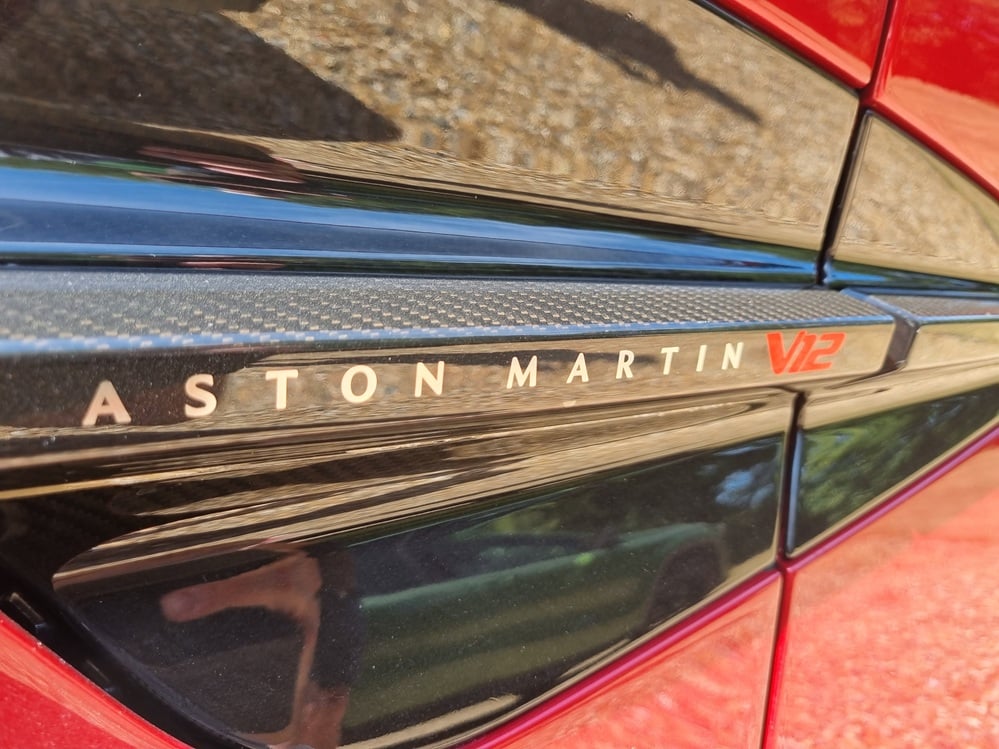
It’s in this setting where it undoubtedly feels most comfortable, capable of the continent-crushing remit of GTs. The only thing putting a dent in proceedings is how regularly you’ll need to stop for fuel. The Aston Martin Vanquish is thirsty; I averaged 15.7mpg from 235 miles.
Away from A-roads, the Vanquish also needs to deliver on its hyper-GT tag. The steering is accurate and predictable, although more delicate throttle inputs are required to avoid overwhelming traction at the rear. It’s rear-wheel drive, after all. You’d be brave to switch ESC off.
On aggressive inputs, from any speed, you can feel it scrabbling for traction. It rewards more progressive inputs on the road, a powertrain that deserves utmost respect. 824bhp and 1,000Nm of torque on tap is a lot and the Vanquish makes you fully aware of that at any speed.
Stick it into manual and it’s an interesting experience running it through in a higher gear. The torque is available en masse from 2500 – 5000rpm, with all 824bhp available at 6500rpm. At this point the roadside is reduced to a blur.
Of the drive modes, Sport feels the Vanquish’s sweet spot. The suspension is never overly firm and Sport controls it better over crests and compressions, reducing the bounce you get in GT. It also holds a lower gear, perfect for attacking your favourite country road.
Aston Martin Vanquish vs Ferrari 12Cilindri: which is the one to have?
The V12-powered GT is, seemingly, an endangered species. The Revuelto is unapologetically a supercar and was our Car of the Year 2025. The V12 GT duo are both likely to make the shortlist for 2026.
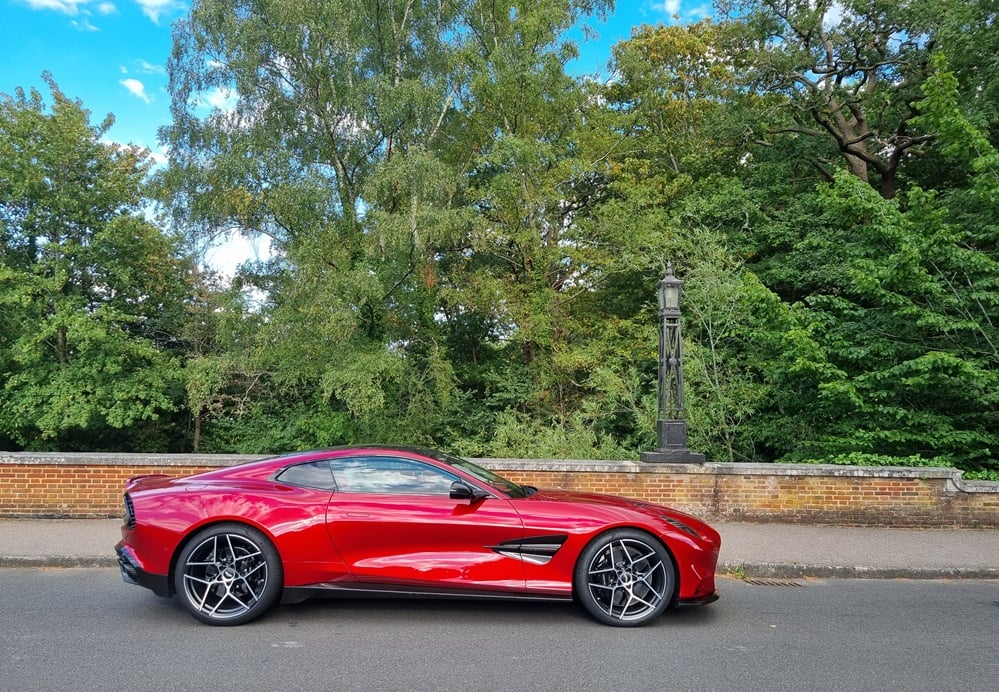
There is just something about a great GT. Throw in a V12 and they become intoxicating. It’s a niche which has narrowed to two cars in the 12Cilindri and the Vanquish. Those are your choices. But what choices they are, two magnificent cars which arrive at the same destination via quite different routes. The Aston is more aggressive and practical, the Ferrari surprisingly pliant until you dig deep and rev the naturally aspirated unit out to its 9500rpm redline. The gearbox and steering are superior in the Ferrari, but it can’t match the Aston for effortless progression or aggressiveness of responses. The Aston is more of a livewire. Both look stunning in the flesh, to these eyes at least.
The comparisons are obvious, not least because both are defined by their engines. Choosing between them is a tough task. Perhaps surprisingly, the Ferrari feels like the more refined of the two. You have to wring it out; chasing that 9500rpm redline offers a great rush of excitement. The turbo-charged Aston, by comparison, redlines at 7000rpm, encouraging short shifting to ride the tsunami of torque. It’s more aggressive from lower speeds, although neither is a shrinking violet.
The Ferrari is easier to drive, feeling less likely to kill you at a moment’s notice. The Aston is livelier, from all speeds. For thrills, spills and added practicality, the Vanquish takes it. For howling, naturally aspirated glory with more satisfying gear shifts, it’s the Ferrari.
Who’s the Aston Martin Vanquish for?
Certainly, those with deep pockets. A starting price of around £335,000 is lofty, and that’s before options. Start adding carbon-fibre here and there and you’re quickly looking at around £400,000, as with the model tested. Not that this will concern owners, but the fuel bills will rack up quickly, too. With an 82-litre tank and an average of 15.7mpg, you’re looking at around 283 miles between refuels; fewer if you don’t want to play chicken with the fuel light.
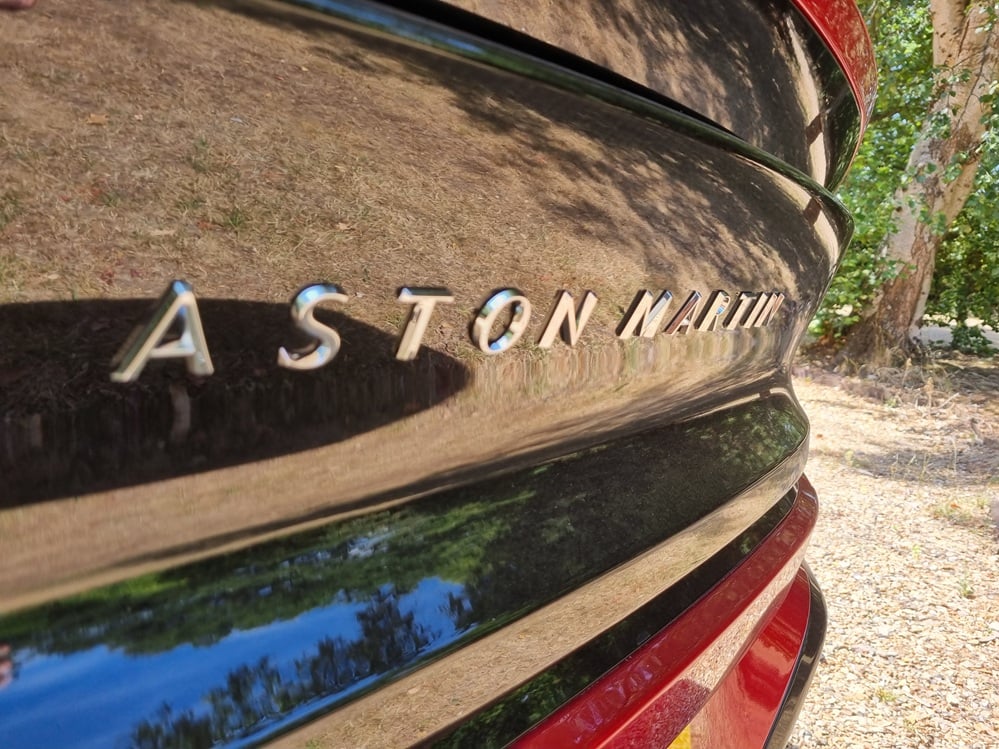
It’s what a car like the Aston Martin Vanquish says about you, however, that matters at this price point. The Brute in a Suit tagline that Aston Martin has used previously fits perfectly here. It looks good, but has a killer touch beneath the surface. For those needing comfort, style and sophistication married to outlandish performance, the Vanquish is a perfect fit. It looks and sounds great, with all the opulence you’d expect. For those who were deterred by the interior and finish of the DBS, the Vanquish is a significant stride forward.
Conclusion
Crucially, it feels like a car that Aston Martin has got very, very right. You could see James Bond driving it and it’s certainly got the chops for it. A gentle jaunt down to the Med followed by a hair-raising car chase would all be in a day’s work for the Vanquish.
It makes you feel good every time you drive it. You see it on your drive and your heart sings. Even walking away there’s a deep satisfaction to be taken from just looking at it, knowing that you’ve driven it.
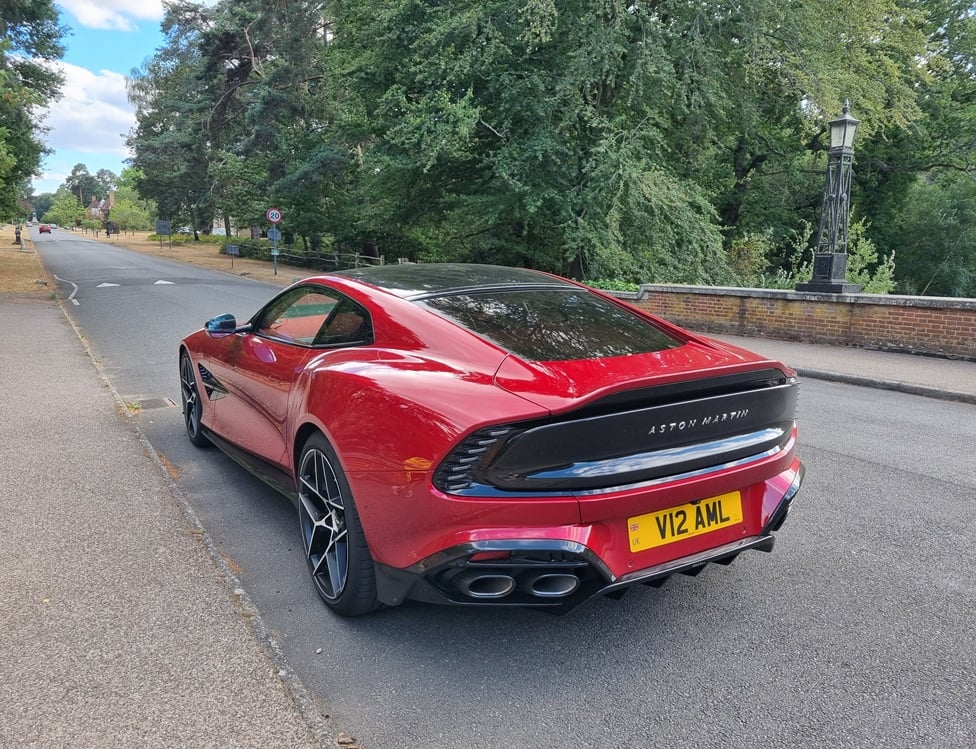
It’s a shame that GT cars are moving towards irrelevance, because, subjectively, they’re my favourite genre. Objectively, there’s little they can’t do. The coalescence of cars has dimmed their appeal to many, since you could make the same do-anything statement about super SUVs. The same is increasingly true of supercars, too, with their creep into all-round GT capability. It’s expanded the choice available but created a more amorphous industry. Some of these cars are just so good that they tread on each other’s toes.
That isn’t necessarily true here, though. From first viewing to last drive, I was captivated by the Aston Martin Vanquish. It handles everything you ask of it with ease and grace, making you feel good about yourself at every turn. It’s a wonderful, languid cruiser when you want it to be, then it will get your pulse racing when you dare to plant your right foot. The V12 certainly helps to give it a distinct character, helping it float above the rest, existing in rarified air.
Cars like the Vanquish need to be special, and this is. It’s more elegant than a supercar; more refined than a super SUV. It just might also be the best Aston Martin ever.