

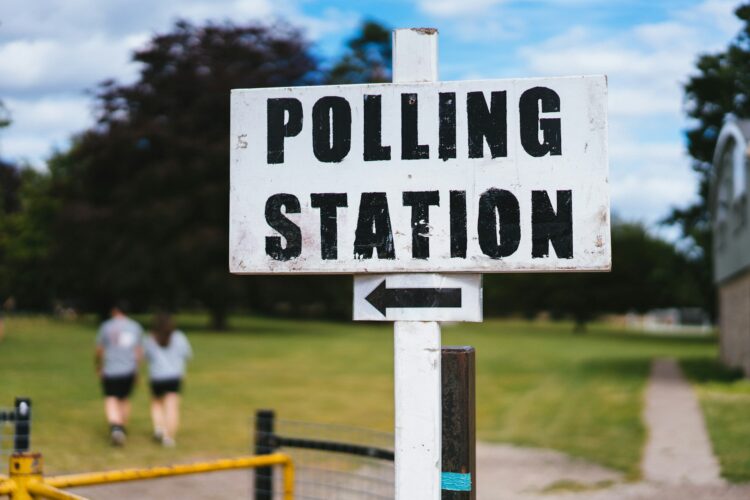
Zack Polanski spent the final week of the Holborn and St Pancras campaign fending off a civil war inside his own party. The Green leader was meant to be the insurgent story of this by-election, the candidate who could finally turn protest votes into an actual seat. Instead, Labour held Keir Starmer’s old constituency, and Polanski woke up facing fresh questions about whether he survives as leader at all.
Traders on prediction markets had already priced Labour as the heavy favourite, and the gap between that pricing and the eventual result tells you something worth sitting with: these markets are not polls with better branding. They are a genuinely different forecasting tool, and the mechanics behind them now stretch a long way past British politics.
How a By-Election Gets Priced Before It’s Decided
Traditional polling asks people what they intend to do. Prediction markets ask people to put money where their mouth is, and that distinction matters more than it sounds. On a contract market, a trader buying “Labour” shares isn’t expressing a preference. They’re betting real money that enough other people will vote the way they expect, which filters out a lot of the noise that shows up in phone polls and online panels.
In Holborn and St Pancras, Labour’s win over the Greens came in a race where HuffPost’s reporting on the final tallies showed a result that tracked closely with where the markets had already settled. That’s not a coincidence. It’s the whole premise of the model. Prices move in real time as new information lands, local canvassing feedback, candidate gaffes, turnout estimates, in a way a weekly poll simply can’t match.
The mechanism isn’t new. It’s just better understood now than it was a decade ago. Polymarket’s live contract for the seat had traders moving probabilities within minutes of local reports about postal vote patterns, well before any broadcaster called the result. Compare that to a snap poll, which locks in its sample the moment fieldwork ends and tells you nothing about what happened on polling day itself.
This is also where the model stops being a politics story. The same contract structure, odds that shift with new information rather than sitting still until the next survey, has quietly spread into sport, entertainment and esports forecasting over the past two years. Bettors who got comfortable reading Westminster markets are now applying the identical logic to tournament brackets and match outcomes, and operators have noticed the crossover audience. Anyone curious where that migration has landed can check the latest prediction market promos now running across esports betting platforms, which package the same real-time pricing mechanics around competitive gaming instead of parliamentary seats.
Gambling carries real financial risk regardless of the market it’s attached to, and anyone exploring these products should only stake what they can afford to lose.
Where the Holborn Numbers Actually Diverged
Here’s the part that gets lost in the “markets called it” framing. They did call the winner. They did not call the margin cleanly, and that gap is the honest story.
Camden Council’s official results show turnout and vote-share figures that landed inside the range most contract prices implied, but not at the centre of it. Markets are good at binary outcomes. Win or lose, yes or no. They get noticeably noisier once you ask them to forecast a precise percentage spread, because the trading incentive is to be directionally right, not decimally right.
That’s worth remembering before anyone treats a market price as gospel. A contract sitting at 80% doesn’t mean the outcome is 80% certain in any strict sense. It means enough capital has settled there that nobody’s found a profitable reason to push it further. Those are related ideas, but they are not the same idea, and conflating them is how people end up overconfident in a forecast that was always a probability range dressed up as a number.
Polanski’s own comments after the result, carried in coverage from AOL’s results recap, acknowledged the internal party tension that had been dragging his campaign for weeks. Markets had been pricing that friction in long before it became a headline, which is arguably the more interesting finding than the final scoreline itself.
Why the Same Logic Travels So Easily
Prediction markets succeed in politics for a specific reason: they aggregate dispersed, often private information faster than any single pollster can collect it. That same advantage applies anywhere outcomes are uncertain, prices can move continuously, and enough participants have skin in the game to keep correcting each other.
Sport is the obvious next stop. Injury news, lineup leaks, weather changes, all of it moves a live market within seconds in a way a pre-match poll never could. Esports has turned out to be an even cleaner fit, partly because match data is granular and public, and partly because the audience already thinks in terms of odds and probabilities from years of following competitive scenes.
None of this makes the mechanism infallible. Markets can be thin, manipulated by a handful of large trades, or simply wrong when something genuinely unpredictable happens on the day. Holborn’s result sat close enough to the pre-vote pricing to count as a validation of the model, not a perfect one.
FAQ
Did prediction markets correctly predict the Holborn and St Pancras result? They correctly favoured Labour over the Greens well ahead of polling day, tracking closely with the eventual outcome. The exact margin proved harder to pin down precisely, which is typical. Markets tend to be strong at calling winners and weaker at forecasting precise vote-share splits.
How is a prediction market different from a regular opinion poll? A poll samples stated intentions at one point in time. A prediction market lets traders buy and sell contracts tied to an outcome, with prices updating continuously as new information arrives. That constant repricing is what gives markets an edge in fast-moving situations like by-elections.
Why would a political forecasting tool apply to esports or sport? The underlying mechanism, pricing uncertain outcomes using real money and real-time data, doesn’t care what the event is. Granular public data and an audience already fluent in odds make esports and sport a natural extension of the same model used in elections.
Are prediction market odds ever wrong? Yes. Thin markets can be swayed by a handful of large trades, and genuinely unexpected events on the day can blow past even a well-calibrated price. A high probability reflects where capital has settled, not a guarantee of the outcome.
What happened to Zack Polanski’s leadership after the Holborn result? The loss intensified existing scrutiny over Polanski’s leadership following internal disagreements within the Green Party. Reporting since the result has focused on whether the party’s current direction can hold, with his position facing renewed questions from within his own ranks.