

Growth has a way of exposing weaknesses that were manageable when a business was smaller. A bigger customer base puts more strain on distribution, technology and people, and pushing into new markets only adds to that complexity.
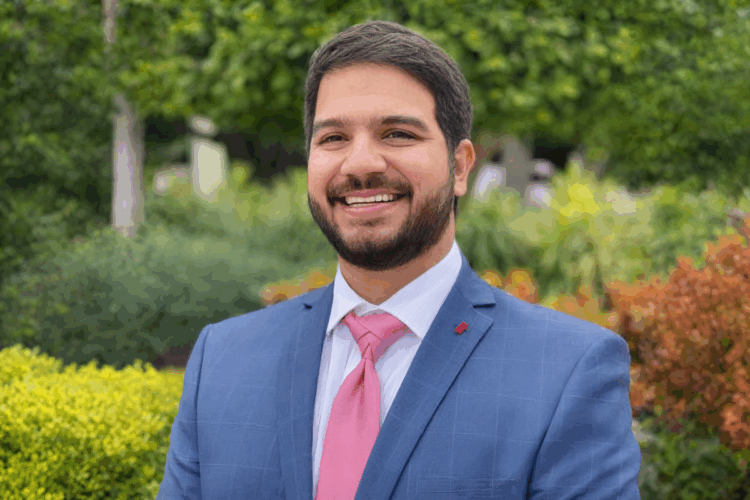
Sebastián Castellanos Duque has encountered that challenge across e-commerce, proptech and international luxury-material supply chains. He currently serves as chief operating officer of ARCA WW and as a business advisor for Rappi, where he has been involved in regional expansion, financial modelling, and last-mile logistics.
Your educational background is in economics and international negotiation. How did that lead you towards operations?
I learned to view businesses from the perspective of systemic interactions. The study of economics and international negotiations requires you to understand incentives, constraints, and trade-offs, whereas econometrics trains your mind to consider interactions between variables.
That approach became tangible once I moved into business process analysis and regional operations across Central America and Colombia, first applying Lean Six Sigma to workflows that were breaking down under pressure, and later managing a regional B2B portfolio at ACCIONPLUS Group. Those years left me with an idea I’ve carried ever since: strategy without execution is just theory. It doesn’t matter how good the plan is — if the organisation doesn’t have the right people, processes and data behind it, nothing actually happens.
You joined Rappi in 2016, and your role eventually expanded into the regional side of the business. Looking back, what did scaling that fast teach you?
The biggest lesson was that growth creates pressure throughout the organisation.
Expanding into another city is not simply a commercial decision. Couriers, demand forecasting, customer support and fulfilment all have to be ready to absorb the volume before the launch, not after it.
In Mexico City alone, I was running a delivery team of more than 5,000 people, and we got delivery times down by 22%. From there, I moved into a director of expansion role covering several Latin American countries, overseeing more than $110 million in investment.
That taught me that growth targets and operating capacity have to move together.
How did you approach leadership while operations were expanding across different markets?
Leadership is about clarity. One person can’t make all the decisions that come up operationally, especially when employees are working in different cities.
There must be clarity on what’s expected of people and how success is measured, while teams close to each market keep enough autonomy to respond to local conditions. For me, good operational leadership means building systems that help people make better decisions rather than expecting every decision to move upwards.
You use the phrase “organisational physics” to describe what happens inside a growing company. What does that mean?
It describes how capacity, technology, costs and execution affect one another.
If one part cannot keep pace, growth exposes the weakness very quickly. A firm may have strong demand but deliver a terrible experience because of a lack of preparedness elsewhere. Likewise, growth without regard to unit economics can leave a business unable to sustain the scale it’s reached. The important thing is to understand these dependencies before they become a problem.
Rappi expanded rapidly during your time in regional leadership. What makes that kind of growth sustainable?
Expansion needs to become repeatable rather than a series of individual launches.
In Mexico, coverage expanded from 12 to more than 45 cities, and the region’s gross merchandise value grew by over 300 per cent year on year. But those figures don’t tell the whole story — behind every new city, the same operational levers had to grow just as fast as the commercial side of the business. That’s the real challenge in scaling: keeping efficiency intact as volume multiplies.
That principle isn’t unique to e-commerce. The World Bank’s Logistics Performance research has repeatedly pointed to delays clustering around ports, transshipment hubs and border procedures — a reminder that resilience in any supply chain, digital or physical, tends to depend on the parts of the system that are hardest to see from the outside.
You later became COO of Mexican proptech company homie.mx, while continuing to advise Rappi part-time. What did running two operating models in parallel teach you about scalability?
It reinforced that scalability isn’t purely a technology question.
At homie.mx, my work centred on automation, digital scoring and unit economics, while investor reporting kept the business accountable for institutional funding rounds. Technology made it easier to handle volume, but the underlying economics and service model still had to hold up — and running that alongside an advisory role at Rappi showed me how differently the same principle plays out depending on the business model. That combination of factors helped put homie.mx on Forbes’ “100 Startups” list, and it confirmed for me that sustainable scale is never just one thing — technology, process and economics all have to develop together.
In 2022, you moved into luxury architectural materials as COO of ARCA WW. What carried over from e-commerce?
The timelines are different, but the operating discipline is similar.
In e-commerce, customers may judge performance in minutes. In architecture and hospitality, timelines are longer, but a delayed shipment, damaged material or quality inconsistency can affect an entire project. At ARCA, my responsibilities include international sourcing, logistics, quality control and physical infrastructure in the United States and Mexico. I’ve overseen the supply of more than 300 million square feet of luxury materials, including work connected with St. Regis and Four Seasons projects.
In both environments, reliability is part of what the customer is buying. The challenge is knowing when speed matters most, and when precision matters more.
What should leaders watch for when a business enters a new stage of growth?
The point where complexity starts increasing faster than capability.
It tends to show up in delivery times, complaints, staff workload, rising costs, or decisions that take longer to make. Throwing more people or technology at it isn’t usually the fix — more often, the real issue sits in how processes are designed, who’s accountable for what, or how information moves around the organisation.
Where do you see the next opportunity to apply that thinking?
I’m particularly interested in supply chains that combine resilience with design, material innovation and cultural value. Studio ARCA and the broader ARCA system represent the chance to link sourcing and operations with creativity.
More generally, firms will increasingly be judged not just on how fast they grow, but on how well they deliver when the pressure is on. That’s where operational thinking becomes part of strategy, rather than simply a support function.